What to bring fruit picking: a practical checklist
A good day of picking comes down to a handful of small decisions made before you leave home: the right shoes, sun cover, something to carry your fruit in and cash for the honesty box. Here's what actually matters, and how it shifts through the year.
The five things every fruit picker needs
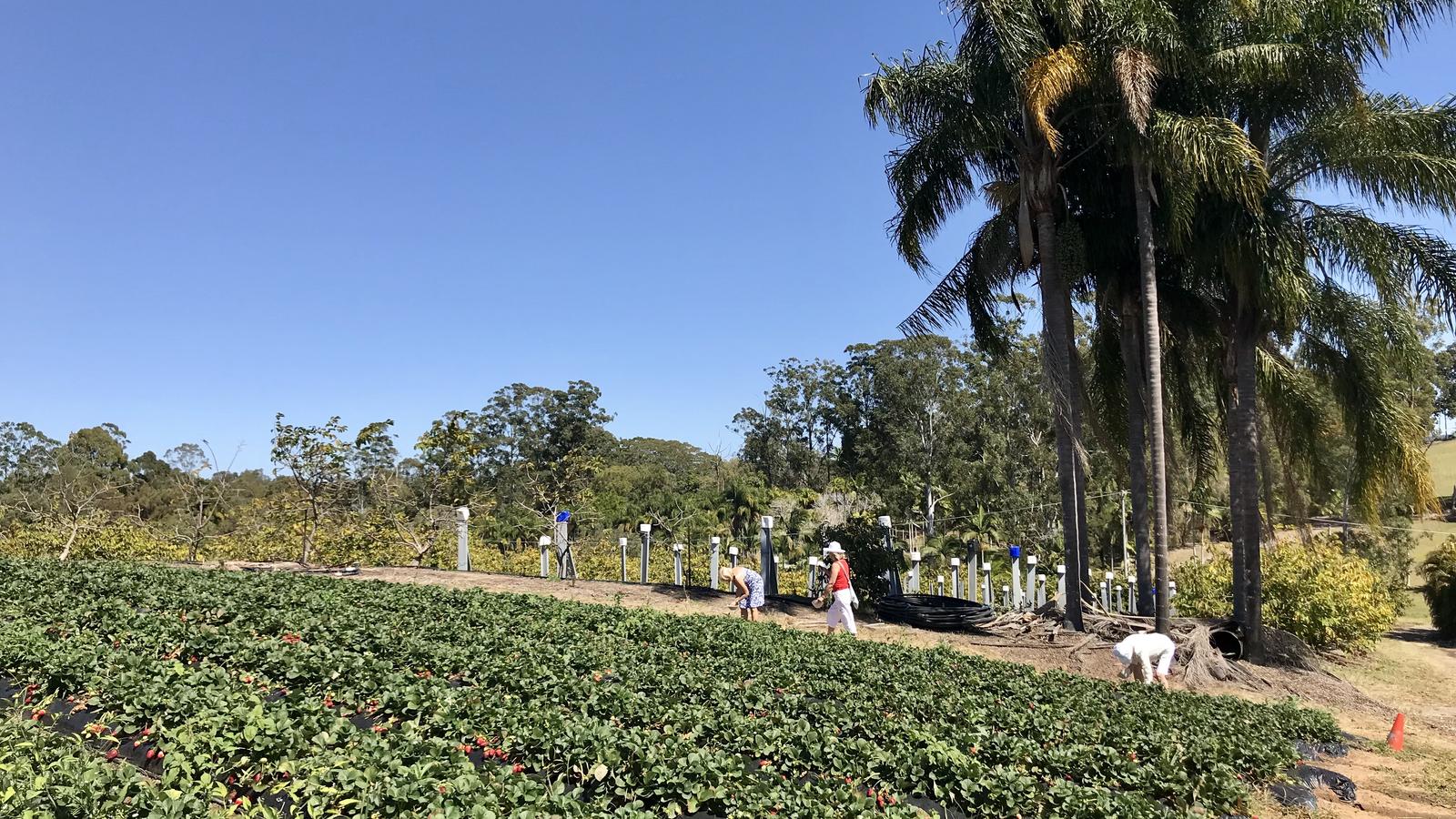
You don't need much to go pick your own fruit, but the few things you do need make the difference between an easy morning and an uncomfortable one. Most strawberry picking patches are low, sun-exposed rows with soft soil that turns to mud after rain, while orchards for cherry picking or apple picking mean uneven ground, ladders or low branches. Pack for the conditions rather than the crop and you'll be right for almost any farm.
- Closed-toe shoes with grip, not thongs or sandals
- A broad-brimmed hat and SPF30+ sunscreen
- A refillable water bottle, especially for anything after 10am
- Cash in small notes and coins, plus a card as backup
- Something to carry fruit in, even if the farm provides containers
Closed-toe shoes and clothes you won't regret
Picking rows are outdoor, working farmland, not a manicured garden path. Berry patches get slippery after irrigation or rain, orchard grass hides fallen fruit and the odd branch, and flower fields often have bees working the same blooms you're cutting. At Surf Coast Sunflowers in Modewarre, the farm specifically asks visitors to bring closed-toe shoes and their own secateurs because bees are active in the patch. A pair of old sneakers or gumboots beats good shoes you'll be scrubbing mud out of later. Add a long-sleeve shirt if you're prone to sunburn or scratches from berry canes, and a light jacket for early starts, since orchard mornings in the cooler months can be a few degrees colder than town.
Sun protection matters more than people expect
Picking rows offer little shade, and an hour spent bent over strawberry plants or reaching into a cherry tree adds up faster than a walk in the park. A hat, sunscreen you actually reapply, and sunglasses are worth packing even on an overcast day, since UV levels in Australia don't track neatly with cloud cover. This matters most across cherry season, which runs through the peak of summer in most states, and orchards like Nashdale Orchards near Orange pick through November and December in full sun with no shade cover over the trees. Bring extra water for kids, who dehydrate faster and are less likely to say something until they're already flagging. Our guide to fruit picking with kids has more on pacing a visit around nap times and heat.
Buckets, punnets and bring-your-own containers
Some farms hand you a punnet, box or bucket as part of the entry fee and simply charge you for the weight you fill; others expect you to turn up with your own container. It pays to check before you drive, because farms vary a lot on this point. Joyful Little Art Space Sunflower Field in Boyup Brook, WA, asks visitors to bring their own bucket, snips, boots and hat, and Bucca Valley Blueberries near Nana Glen on the NSW Coffs Coast runs on an honesty system where you weigh your own blueberries at a shed and pay in exact cash. A sturdy shopping bag, an old ice-cream container or a small backpack all work in a pinch if a farm doesn't supply anything. If you're planning to pick more than you'll eat in a couple of days, our guide on how to store and freeze your pick is worth reading before you go, especially for soft fruit like berries that don't keep well loose in a hot car.
Cash, EFTPOS and how u-pick farms actually charge
Plenty of smaller, family-run farms are still cash-only, particularly ones that operate on the honesty system or sit well outside town. Lomas Orchards in Wallington, on Victoria's Bellarine Peninsula, doesn't take EFTPOS at all, and the nearest ATMs are in Ocean Grove or Leopold, a genuine drive away if you turn up without notes. Larger, better-resourced operations such as Beerenberg Farm in Hahndorf, in South Australia's Adelaide Hills, charge a modest entry fee plus a per-kilogram rate for what you pick and are set up for card payments. As a rule, carry cash regardless. Gate entry fees, gold-coin donations and small farm stalls selling jam or ice-cream on the side are often cash-only even when the main till takes cards.
What changes with the seasons
Because Australia stretches from tropical Queensland to cool-temperate Tasmania, your packing list should shift with both the calendar and the climate zone you're heading into. During the winter months, it's southern Queensland's turn for strawberry picking rather than the southern states' — the season runs roughly June to October around Brisbane and the Scenic Rim, quite different to the October-to-May window further south. Check our what's in season page for the current picture nationally, and always confirm timing directly with the farm before you drive.
| Season | What's typically ripe | Extra to pack |
|---|---|---|
| Winter (Jun-Aug) | QLD strawberries, late citrus, some apples | Warm layers, closed shoes for muddy rows, a beanie for early starts |
| Spring (Sep-Nov) | Southern strawberries ramping up, cherries beginning in warmer regions | A light rain jacket, sun hat as UV climbs, spare socks |
| Summer (Dec-Feb) | Cherries, stone fruit, blueberries, sunflowers | Extra water, broad-brim hat, an esky with ice bricks for the drive home |
| Autumn (Mar-May) | Apples, pears, late-season berries | A light jacket, sturdy shoes for wet orchard grass |
A few extras worth throwing in the car
Beyond the basics, a small kit in the boot saves a lot of hassle:
- An esky or cooler bag with ice bricks, especially for soft fruit like berries in warmer months
- Hand sanitiser or wet wipes for sticky fingers before you're back in the car
- A few dollar coins for gold-coin entry or honesty boxes
- A phone charger, so you can call ahead if plans change on the day
- A basic first aid kit if you're bringing young children
Kids in tow? Pack a little more
Kids move slower in a picking row, get hot faster and are harder to keep off the fruit before it's paid for. A spare set of clothes, more snacks and water than you think you'll need, and a hat that actually stays on all help. Some farms, like Chambers Flat Strawberry Farm south of Brisbane, get busy on weekends in peak season and recommend booking ahead, which is worth doing if you're travelling with a pram or a toddler who tires easily. Our fruit picking with kids guide covers pram-friendly rows, nap timing and what to expect from toddlers in a working orchard.
Before you head out
A quick call or website check before you leave home avoids wasted drives — patches close early when fruit runs out, weather can shut a farm for the day, and some require bookings for pick-your-own sessions. Our pick-your-own etiquette guide covers the unwritten rules once you're in the row, and the fruit picking season calendar is a handy reference for planning further ahead than one month at a time.
Seasons shift with the weather. Always call the farm to confirm what's ripe and that they're open before you drive out.
What not to bring
A few things are easy to assume and often wrong. Here's what to leave behind or double-check first:
- Your dog, unless you've checked — restrictions vary a lot, and macadamia orchards in particular often ban dogs because the nuts are toxic to them; at Macadamias Australia near Bundaberg, dogs aren't permitted past the car park.
- Clothes you'd be upset to stain — cherry and berry juice doesn't wash out easily, and orchard rows turn to real mud after rain.
- Your own secateurs for most flower-picking sessions — tickets usually include or hire out snips, though Surf Coast Sunflowers and Joyful Little Art Space Sunflower Field both ask visitors to bring their own, so it's worth checking when you book.
- Total confidence in your phone signal — plenty of farms sit well outside town, in patches of patchy or no coverage.
Planning the drive itself
The packing list matters as much for the trip out as for the picking. Plenty of pick-your-own farms sit down back roads that mobile coverage doesn't reach reliably. At Ten Chain Farm near Upper Flagstone in Queensland, the farm's own advice to visitors is to bring cash because on-site reception is patchy — a reminder to sort out payment, directions and any booking confirmation before you leave rather than counting on your phone once you're there. Download or screenshot directions, fill the tank before you leave town, and pack snacks and water for the drive itself as well as for the visit, especially with kids in the car or on a route you haven't driven before.
Getting your fruit home in good shape
Soft fruit bruises fast once it's off the plant, and a hot closed boot undoes a good morning within the hour. Keep berries in a single layer rather than piled deep in one container, and if you're stacking more than one box, put the heaviest on the bottom rather than jamming everything in tight. Park in the shade while you're still picking if you can, and move fruit into an esky with ice bricks or an air-conditioned cabin rather than leaving it in a closed boot on a warm drive home. If you've picked more than you'll get through in a day or two, our guide to storing and freezing your pick covers what holds up in the freezer and what's best eaten fresh.