Fruit picking with kids: a practical Australian guide
Fruit picking is one of the few days out where toddlers and teenagers both have a job to do. Here's what it really costs, which crops suit which ages, and how to avoid a meltdown in the car park before you've even picked a punnet.
What a fruit-picking day actually looks like
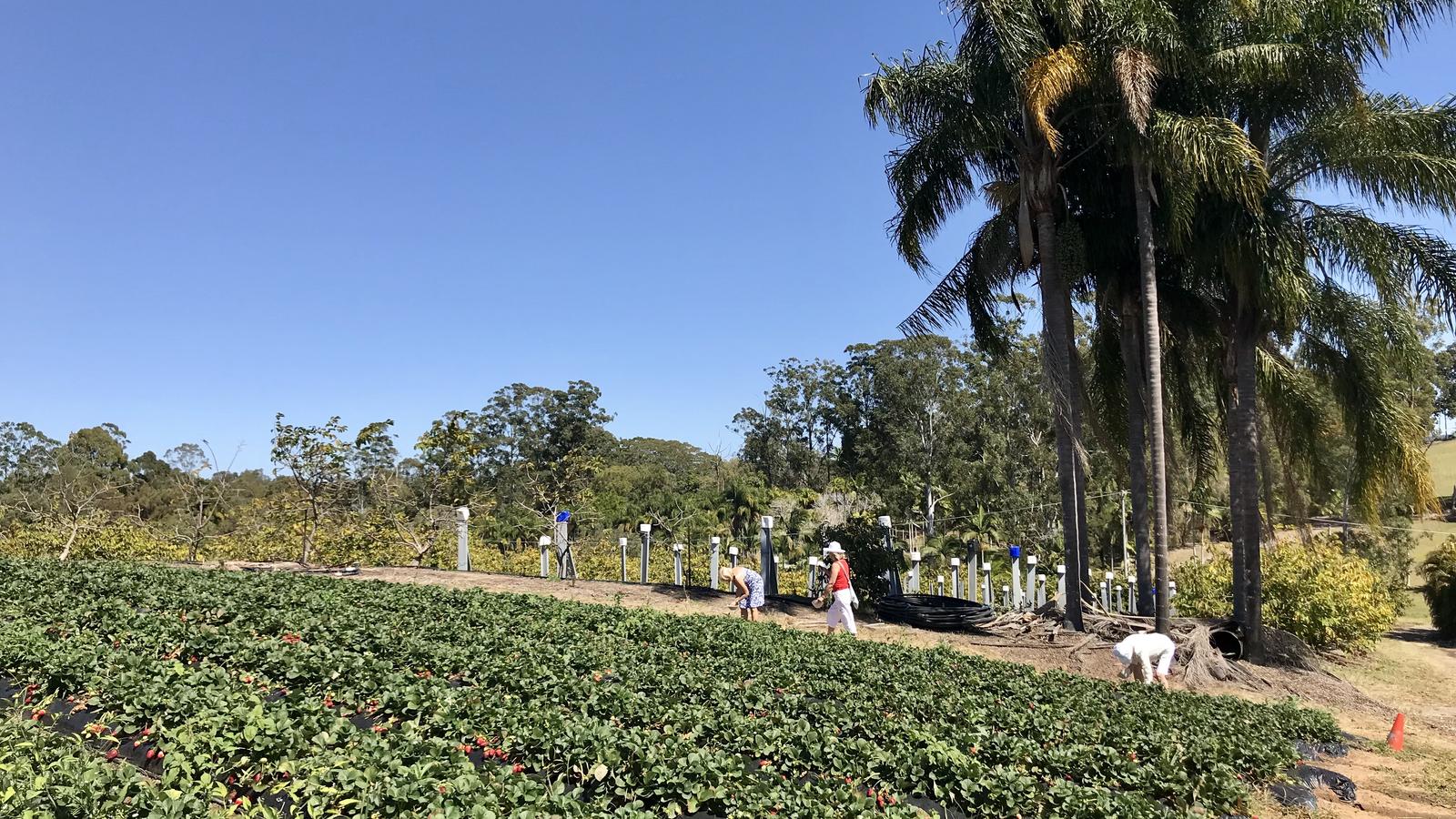
Most pick-your-own farms work the same way: you pay an entry fee (sometimes this includes a punnet or bucket), you're pointed to the current picking patch, and you pay for anything extra by weight on the way out. Rows are usually flat and manageable with a pram, though ladders come into play for cherries and taller stone fruit, which changes who can pick what. Toilets, shade and a farm shop or cafe are the three things that make or break a visit with young kids, so check what's on site before you commit to the drive.
Almost every farm we've listed asks you to call ahead or check their website or social media the morning you're going — patches get picked out, weather changes what's ripe, and some farms close the gate early on a hot day for exactly the reason you'd expect: nobody wants toddlers in a strawberry patch at 38 degrees. Seasons shift with the weather, so treat every month range in this guide as a normal-year estimate, not a guarantee.
What it costs: real prices from real farms
Pricing usually falls into one of two models: an entry fee per person (often with a free or discounted rate for young children) plus a per-kilo charge for what you take home, or straight pay-for-what-you-pick with no entry fee at all. Family passes are common and worth asking about even if they're not advertised online. Here's a sample of current pricing as reported by the farms themselves or verified visitor sources — always confirm before you drive out, since these change with the season.
| Farm | State | Crop | Entry / adult | Kids |
|---|---|---|---|---|
| Beerenberg Farm, Hahndorf | SA | Strawberries | $5/person entry; strawberries $13.50/kg | Under 12 free entry |
| Chambers Flat Strawberry Farm | QLD | Strawberries | ~$15 (includes 500g punnet) | Ages 3-12 ~$7.50 (includes 250g punnet); infants free |
| Harben Vale Cherries, Balhannah | SA | Cherries | $8 entry; cherries priced per kg | Under 12 $4; under 5 free |
| CherryHill Orchards, Wandin East | VIC | Cherries | ~$22.50 weekday / ~$25 weekend, all-you-can-eat while picking | ~$13 weekday / ~$15 weekend |
| Folly Farm Blueberries, Olinda | VIC | Blueberries | $20 (includes 500g picked) | $10 |
| Berrylicious Strawberries, Thirlmere | NSW | Strawberries | $22, eat-as-you-pick; $25/kg to take home | $11; under 2 free |
| Ricardoes Tomatoes and Strawberries | NSW | Strawberries | Free entry, pay per kg only | Same rate, no separate child charge |
Notice the two very different models in that table: some farms charge more up front but let you (and the kids) graze while you pick, others keep entry free or low and simply weigh what ends up in the bucket. An eat-as-you-pick cherry farm can work out cheaper for a family that snacks constantly and picks lightly; a pay-by-weight strawberry farm suits a family planning to go home with a full punnet or two.
Which crops suit which ages
Not every crop is a good match for every age, mostly because of reach, thorns and how easily the fruit bruises.
Strawberries and blueberries are the easiest starting point. The plants sit low, there's nothing sharp, and a two-year-old can genuinely pick one (and eat three). If you're near Brisbane in winter, Sunshine Coast and Scenic Rim strawberry farms are in full swing from June through October, and further north around Bundaberg the season runs May to October — both cover the school holidays without the summer heat. See our strawberry picking guide for season windows by state.
Cherries are more fun for primary-school-aged kids and up, since a lot of the fruit sits higher in the canopy and ladders or step-stools are often involved. Farms like Harben Vale Cherries in the Adelaide Hills and the cherry orchards around Victoria's Yarra Valley run their season from roughly November to January — check our cherry picking guide for exact months in your state.
Apples and pears sit somewhere in the middle: lower branches are easy for small hands, but the best fruit is often just out of a toddler's reach, so plan on lifting younger kids for the top rows. Bilpin in the NSW Hawkesbury and the Perth Hills are reliable spots from roughly January through May — our apple picking guide has the full state-by-state breakdown.
Sunflowers are less about picking and more about photos, but they're genuinely toddler-proof: no ladders, no thorns, and the stems are usually cut for you or with blunt snips supplied on-site.
Age-by-age tips
- Babies and toddlers (0-2): Stick to low-growing crops like strawberries or blueberries, bring a pram with all-terrain wheels (rows can be uneven or muddy after rain), and check the farm has shade or a covered area for a feed or nap break. Confirm toilets and a change table exist before you leave home — plenty of smaller farms don't have either.
- Preschoolers (3-5): This is the sweet spot for strawberry and blueberry farms. Kids this age can follow simple instructions along the lines of only the red ones, and most farms have a discounted or free entry rate for this bracket. Expect them to eat a good portion of what they pick before it reaches the punnet.
- Primary school (6-9): Old enough to handle a full punnet responsibly and to enjoy cherry picking with a step-stool. This is also the age where a per-kilo pricing model starts to make sense, since they'll pick with more purpose than a toddler.
- Tweens and teens: Genuinely useful pickers, and often the fastest in the family. Orchard fruit like apples and pears, or a full day at a cherry farm with all-you-can-eat pricing, tends to suit this age best value-wise.
What to pack
- Hats and sunscreen even on a mild day — most patches have little to no shade.
- A refillable water bottle each; farm shops don't always sell cold drinks.
- Old shoes or gumboots — rows can be muddy, especially after winter rain in the southern states.
- A change of clothes for younger kids (strawberry and blueberry juice stains).
- Cash as a backup — some smaller, honesty-system farms are cash- or card-only with no ATM on site.
- Reusable bags or an extra container if you plan to buy more than the basic punnet.
- A pram with sturdy wheels, or a baby carrier as backup if the rows look too uneven to push.
Timing it right
Weekday mornings are almost always quieter and cooler than weekend afternoons, which matters more with kids than with adults. If you can only go on a weekend, aim to arrive at opening time — the best fruit (and the shadiest parking spots) tend to go early. During school holidays, popular farms near capital cities can book out their picking sessions entirely, so check whether the farm takes bookings before you drive out; several require it, and it's marked on each farm's page here. Whatever the season, the same rule applies everywhere: seasons shift with the weather, so always call the farm to confirm what's ripe and that they're open before you go.
Choosing a family-friendly farm
Beyond the crop itself, a handful of practical details decide whether a farm works for your family: toilets, a cafe or shaded seating area for a break, pram or wheelchair access along the rows, and whether dogs are welcome if yours is coming along. Every farm listing on this site shows these details up front, along with whether booking is required and what the entry actually includes, so you can compare a few options before you commit to a drive. If you're new to picking altogether, our what to bring fruit picking guide and pick-your-own etiquette guide cover the basics that apply to every age group, and the season calendar guide is worth bookmarking if you're planning trips across the year.
Fruit picking with kids near Sydney
TNT Produce at Bilpin is one of the more animal-heavy stops on this list — alongside apple, stone fruit and strawberry picking from roughly January through June, kids can see sheep, goats, ducks, guinea pigs, birds and chickens on the same visit, and there's a cafe on site with dogs welcome too. Entry is booked online, with picked fruit paid for on the day. Closer to Sydney at Thirlmere, Berrylicious Strawberries keeps things simpler for younger kids — low rows and eat-as-you-pick pricing, with strawberries available most of the year. For the wider spread of options, see our best fruit picking near Sydney guide or browse farms across the Sydney Basin.
Fruit picking with kids near Melbourne
Rayner's Orchard at Woori Yallock runs a guided tractor tour through the Dandenong Ranges orchard that folds in fruit tasting, picking and animal feeding, with a cafe on site — the kind of built-in entertainment that suits a family better than a straight u-pick, though it needs booking ahead. CherryHill Orchards at Wandin East, already covered above for its all-you-can-eat cherry pricing, also runs a ticketed spring Blossom Festival if you want to time a visit around something extra. Both sit within the Dandenong Ranges picking region; our best fruit picking near Melbourne guide covers the wider area, including the Yarra Valley cherry and berry farms mentioned earlier.
Fruit picking with kids near Brisbane
Ellia's Garden at Rosevale-Moorang opens for public farm days on the first Sunday of each month, and beyond the seasonal produce picking there's a genuine kids' drawcard built in: tractor hay rides, animal feeding and a hay-bale play structure. Chambers Flat Strawberry Farm, covered in the pricing table above, is the simpler option if you just want low rows and a punnet, with strawberry picking typically running August through October. Both sit within reach of Brisbane; our best fruit picking near Brisbane guide covers more of southeast Queensland.
Fruit picking with kids near Perth
The Orchard Perth at Lower Chittering bundles citrus picking into a guided tractor tour that also includes an on-site farm-animal experience, with both a cafe and toilets on the property — a useful one-stop option if you'd rather not chase down facilities separately, though it's a booked ticketed tour rather than a walk-in visit. Carmel Cherry Farm in the Perth Hills also has toilets on site, with cherries running roughly November to December and loquats a little earlier in spring. See our best fruit picking near Perth guide or browse the wider Swan Valley region for more options. Wherever you're headed, it's worth cross-checking timing against our what's in season in December and June pages, since exact ripening shifts a little every year.