
How to pick strawberries: a complete Australian guide
Strawberries are the most forgiving crop in Australian u-pick: low to the ground, easy for small hands, and grown somewhere on the continent almost every month. Here's how the season shifts state to state, what it costs, how to pick a ripe one, and how to store your haul.
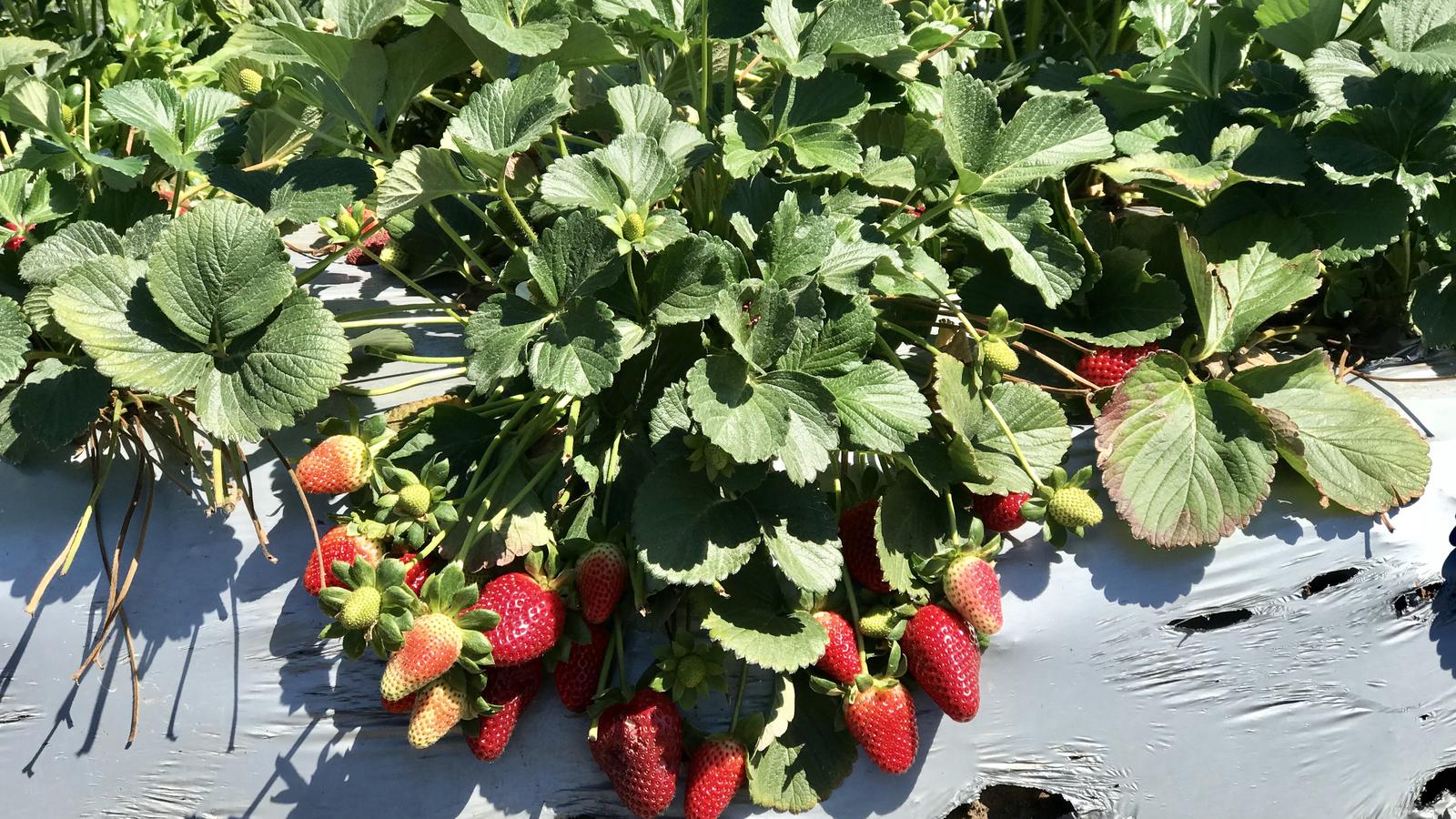
Why strawberry season never really stops in Australia
Most fruit crops have a single window. Strawberries are different, because Australia grows them in two distinct climates that take turns. Southern states — Victoria, South Australia, New South Wales and Tasmania — run open-field strawberry patches from roughly October through to April or May, following the normal spring-to-autumn warmth. Southern Queensland does the opposite: its strawberry belt around Wamuran, Caboolture and the Granite Belt is a genuine winter crop, planted in autumn and picked from May through to October or November, because the coastal Queensland climate is too hot and humid for strawberries in summer. That means during the winter months, Queensland is the only place in the country with strawberries properly in season, while the southern states are months from their next spring punnet.
A handful of farms sidestep the seasonal split altogether by growing under cover. Ricardoes Tomatoes and Strawberries near Port Macquarie grows on vertical hydroponic frames in sheltered greenhouses and picks year-round, and Berrylicious Strawberries in Thirlmere, south-west of Sydney, does the same in polytunnels with fruit at waist height. These are the exception, not the rule — most of the farms on this site follow the open-field seasons below, which shift earlier or later depending on frost, heat and rainfall in any given year.
Strawberry season by state
| State/region | Typical season | Peak |
|---|---|---|
| QLD — Brisbane/Scenic Rim (Wamuran, Caboolture) | June to October | August-September |
| QLD — Bundaberg/Wide Bay | May to October | July-August |
| QLD — Granite Belt (Stanthorpe) | October to May | December-February |
| NSW — Sydney Basin/Hawkesbury-Bilpin | September to July (farm dependent) | October-December |
| NSW — Orange/Central West | November to May | December-February |
| VIC — statewide (Yarra Valley, Geelong, Gippsland, Goulburn Valley) | October to May | December-February |
| SA — Adelaide Hills and Fleurieu Peninsula | October/November to April/May | December-February |
| WA — Swan Valley/Wanneroo | August to December | September-November |
| TAS — statewide | October to May | December-February |
Treat every row above as a normal-year estimate rather than a fixed date. A wet spring, an early heatwave or a run of frosty nights can shift a season by weeks in either direction, and individual farms within the same district often open and close a few weeks apart from each other.
Queensland's winter strawberry season, explained
If you're outside Queensland, it can seem odd that the strawberry capital of the country picks in the middle of winter, but the logic is simple: strawberries need mild days and cool nights to fruit well, and South East Queensland's dry season (roughly May to October) delivers exactly that, while the wet, humid summer would rot the fruit on the plant. The Moreton Bay hinterland around Chambers Flat Strawberry Farm in Logan and the Wamuran district north of Brisbane are the heart of it, alongside the Bundaberg district further north, which starts a little earlier in May and often finishes by early October.
Chambers Flat Strawberry Farm, about 40 minutes south of the Brisbane CBD, is one of the closest pick-your-own patches to the city and charges roughly $15 for an adult entry that includes a 500g punnet, with children aged three to twelve around half that. Rolin Strawberry Farms at Elimbah, also known locally as the Big Strawberry, runs timed picking sessions through the day from 1 June to mid-November and hands out a wooden basket at the farm shop rather than charging a set entry fee. Down in the Granite Belt, Ashbern Farms at Stanthorpe runs a notably longer season, October to May, with free entry and payment purely by the weight of what you pick — useful to know if the Brisbane winter crowds put you off and you'd rather visit the cooler tablelands district on its own, later schedule.
Best places to pick strawberries in Australia
Every state has at least a handful of working strawberry patches; these are a representative spread, not the full list.
Queensland. Beyond Chambers Flat and Rolin, Tinaberries and SSS Strawberries, both in the Bundaberg/Wide Bay district, run their farm shops from May through October, though SSS specifically opens its pick-your-own patch in August and charges purely per kilogram with no entry fee. In the Sunshine Coast hinterland, Glass House Tropical Fruits opened in mid-2026 as the region's only season-long strawberry patch, priced at $15 per 500g at the start of the season and expected to ease toward normal market rates as the crop builds through winter.
New South Wales. TNT Produce in Bilpin runs one of the longest open-field windows in the state, October through July, alongside its apples, stone fruit and citrus. Further south-west, Bidgee Strawberries and Cream in Wagga Wagga grows on 20,000 hydroponic plants from November to May and charges $5 entry plus $25/kg for what you pick, with a farmgate ice-cream cafe on site. Huntley Berry Farm near Orange picks later again, reflecting the Central West's cooler climate.
Victoria. The state runs the most consistent October-to-May window of anywhere in the south. The Big Strawberry at Koonoomoo in the Goulburn Valley picks across two windows, October to January and again April to July, and is open 9am to 3pm seven days; The Berry Dairy in Gippsland charges a $3 entry (free under five) with punnets from $6 to $20; and Kookaberry Strawberry Farm in the Yarra Valley grows strawberries alongside raspberries, blackberries and figs. On the Bellarine Peninsula, Surf Coast Strawberry Fields near Torquay sells punnets already included in the entry price, while Lomas Orchards nearby is cash only, so bring notes.
South Australia. Beerenberg Farm in the Adelaide Hills is the best-known strawberry patch in the state, a 200-year family property charging $5 entry (under-12s free) with strawberries at $13.50/kg, open almost daily through its November-to-April season. On the Fleurieu Peninsula, Harvest the Fleurieu runs a similar model from October to May, $5 entry and $12/kg, with a cafe and market hall on site for the rest of the year.
Western Australia. The Swan Valley and Wanneroo growing belt north of Perth runs on a shorter, spring-into-early-summer window than the eastern states. H&N Strawberries in Gnangara picks September to January and charges $15 for a roughly 3kg box, cash only, while Minh Tran's Strawberry Farm at Neerabup opens late August through December at $20 for pick-your-own. Several of the smaller family farms around Bullsbrook and Gnangara are cash-only, weekend-only operations, so check current opening days on Facebook before you drive out.
How to pick a ripe strawberry
A strawberry doesn't ripen further once it's off the plant, unlike a banana or a tomato, so picking it at the right moment matters more than with almost any other fruit.
- Look for fruit that's fully red to the shoulders, right up near the green cap — a pale or white patch near the stem means it was picked too early and will taste sour.
- Pinch or snip the stem about a centimetre above the fruit rather than pulling the berry itself; tearing it off the plant bruises the flesh and can damage the plant for future fruit.
- Handle each berry by the stem or cap where you can — strawberries bruise easily and a fingerprint left in the flesh turns brown within an hour.
- Pick into a single layer where possible. Stacking strawberries more than two or three deep in a punnet crushes the fruit at the bottom.
- Skip anything with soft spots, mould or a dull, matte skin — these won't improve at home and are worth leaving in the row.
What it costs
Pricing follows one of a few models across the farms above: a flat per-kilogram rate with no entry fee (Ricardoes, SSS Strawberries), an entry fee that includes a punnet or box (Chambers Flat, Beerenberg, Harvest the Fleurieu), or eat-as-you-pick entry with a separate rate to take fruit home (Berrylicious Strawberries). As a rough guide, expect somewhere between $12 and $25/kg for what you take home, and $3 to $15 for entry where one applies. Family passes are common even where they're not advertised online, so it's worth asking. All prices here are as reported by the farms as at July 2026 and will move with the season, so confirm current pricing before you drive out.
Storing and using your strawberries
Strawberries are one of the most perishable fruits you'll pick, and they start losing quality within hours of a warm car boot. Keep them out of direct sun on the drive home and into the fridge as soon as you can — unwashed, in a single layer or shallow container rather than piled deep, and only rinse them just before you eat them, since wet strawberries mould faster than dry ones. Stored this way, most varieties last three to five days in the crisper. If you've picked more than that, hulling and freezing them on a tray before bagging keeps them usable for smoothies and baking for months; our guide to storing and freezing your pick covers the full method along with jam and freezer-friendly tips for other berries.
Planning your visit
Strawberry patches are among the easiest crops to bring young children to — the plants sit low, nothing is sharp, and most farms have a discounted or free entry rate for toddlers. See our fruit picking with kids guide for age-by-age tips, and our what to bring fruit picking checklist for the practical packing list, since strawberry juice stains and rows can get muddy after rain. If you're chasing other berries too, our blueberry picking and raspberry picking guides cover the same regions, and the full season calendar is worth bookmarking if you're planning picking trips across the year rather than just one visit.
Seasons shift with the weather. Always call the farm to confirm what's ripe and that they're open before you drive out.
Strawberry picking near Melbourne
Melbourne is arguably the best-served capital for strawberry picking in the country, with patches spread across four separate growing pockets within about ninety minutes of the CBD. In the Yarra Valley, roughly an hour east, Kookaberry Strawberry Farm at Wandin North runs strawberries alongside raspberries and blackberries from November to April, and Yarra Valley Gateway Estate at Coldstream grows its strawberries indoors under glass — call ahead to confirm the greenhouse patch is open for picking before you drive out. A short distance further into the hills, Jay Berries at Wandin East picks strawberries, raspberries, blackberries and blueberries through spring and summer, with an entry fee that covers a container and a taste as you go.
On the Mornington Peninsula, about ninety minutes south-east, Rocky Creek Strawberry Farm at Main Ridge (formerly Sunny Ridge) opens daily through its November-to-April season, and Hawkes Farm at Boneo picks strawberries as part of a ticketed tractor tour on the last Saturday of the month from September to April rather than as a daily walk-in patch, so book ahead if you're planning around it. West of the city on the Bellarine Peninsula, Surf Coast Strawberry Fields and Lomas Orchards — both covered above — run from October or November through autumn, and Tuckerberry Hill Berry Farm at Drysdale adds strawberries to its blueberry and stone fruit rows on a weekends-only basis from November to March.
Strawberry picking near Sydney
The Sydney basin has two real options depending on which side of the city you're coming from. North-west in the Bilpin orchard district, about ninety minutes from the CBD along Bells Line of Road, TNT Produce runs one of the longest strawberry windows in the state, October through July, alongside its apples, stone fruit and citrus, and Bilpin Fruit Bowl next door adds strawberries to an unusually wide pick-your-own vegetable patch, open weekends and public holidays from mid-November to the end of May. South-west of the city, about an hour from the CBD, Berrylicious Strawberries at Thirlmere grows in polytunnels at waist height and picks year-round, which makes it the closest thing Sydney has to a strawberry farm with no off-season.
Strawberry picking near Brisbane
Brisbane's strawberry patches cluster in the Moreton Bay hinterland north and south of the city, all within about an hour's drive. Chambers Flat Strawberry Farm, covered above, is the closest at around 40 minutes south of the CBD. North of the city towards Caboolture, Oasis Berries runs pick-your-own as part of its annual Strawberry Festival, typically in September and October — booking ahead is recommended since it's a ticketed event rather than a daily walk-in, and pricing is only published when each year's festival is announced. Further out towards the Sunshine Coast, Glass House Tropical Fruits, also covered above, opened as the region's only season-long patch and runs the same May-to-November window as the rest of South East Queensland.
Strawberry picking near Perth
Perth's strawberry farms sit in a tight cluster around the Swan Valley and Wanneroo, all within about 45 minutes of the CBD, and between them cover spring into early summer. Ti Strawberry Farm at Bullsbrook picks under high tunnels from August to February and charges around $10 a tray plus a $2 per-person entry fee, though the farm notes pricing varies from year to year. H&N Strawberries at Gnangara and Minh Tran's Strawberry Farm at Neerabup, both covered above, run similar spring windows, and Hoang Le's Strawberries at Wanneroo has one of the shortest seasons on this list — cash only, and typically open for just a few weeks in October and early November — so it's worth calling ahead before making the drive.
Strawberry picking near Adelaide
Adelaide has fewer strawberry farms than the eastern capitals, but both of its main patches are an easy day trip. Beerenberg Farm, covered above, is in the Adelaide Hills at Hahndorf, around 30 minutes from the CBD, and open almost every day of its November-to-April season. Harvest the Fleurieu, also covered above, is a little further south at Mount Compass on the Fleurieu Peninsula, roughly 50 minutes from the city, and runs the same October-to-May window with a cafe and market hall open outside picking season too.
Strawberry season by month, with what else is ripe
Because strawberries run on two separate calendars — the southern spring-to-autumn crop and Queensland's winter crop — there's rarely a month with nothing to pick somewhere in the country. Each month below links to the site's full in-season list for that month, useful if you're planning a trip around more than just strawberries.
| Month | Where strawberries are in season |
|---|---|
| January | NSW Orange, VIC, SA and TAS at peak; QLD Granite Belt still going |
| February | NSW Orange, VIC, SA and TAS at peak; QLD Granite Belt still going |
| March | VIC, SA and TAS continuing; QLD Granite Belt and NSW Orange tailing off |
| April | VIC, SA and TAS in their final weeks; most other regions closed for the season |
| May | QLD Bundaberg opening; last of the VIC/SA/TAS season |
| June | QLD Bundaberg and QLD Brisbane/Scenic Rim (Wamuran, Caboolture) both open |
| July | QLD Bundaberg at peak; QLD Brisbane/Scenic Rim building; NSW Sydney Basin opening |
| August | QLD Brisbane/Scenic Rim at peak; WA Swan Valley opening |
| September | QLD Brisbane/Scenic Rim still at peak; WA Swan Valley at peak; NSW Sydney Basin building |
| October | NSW Sydney Basin at peak; QLD Granite Belt, VIC, SA and TAS all opening; WA Swan Valley still going |
| November | NSW, VIC, SA and TAS all underway; QLD Granite Belt building towards peak |
| December | QLD Granite Belt, NSW Orange, VIC, SA and TAS all at peak |